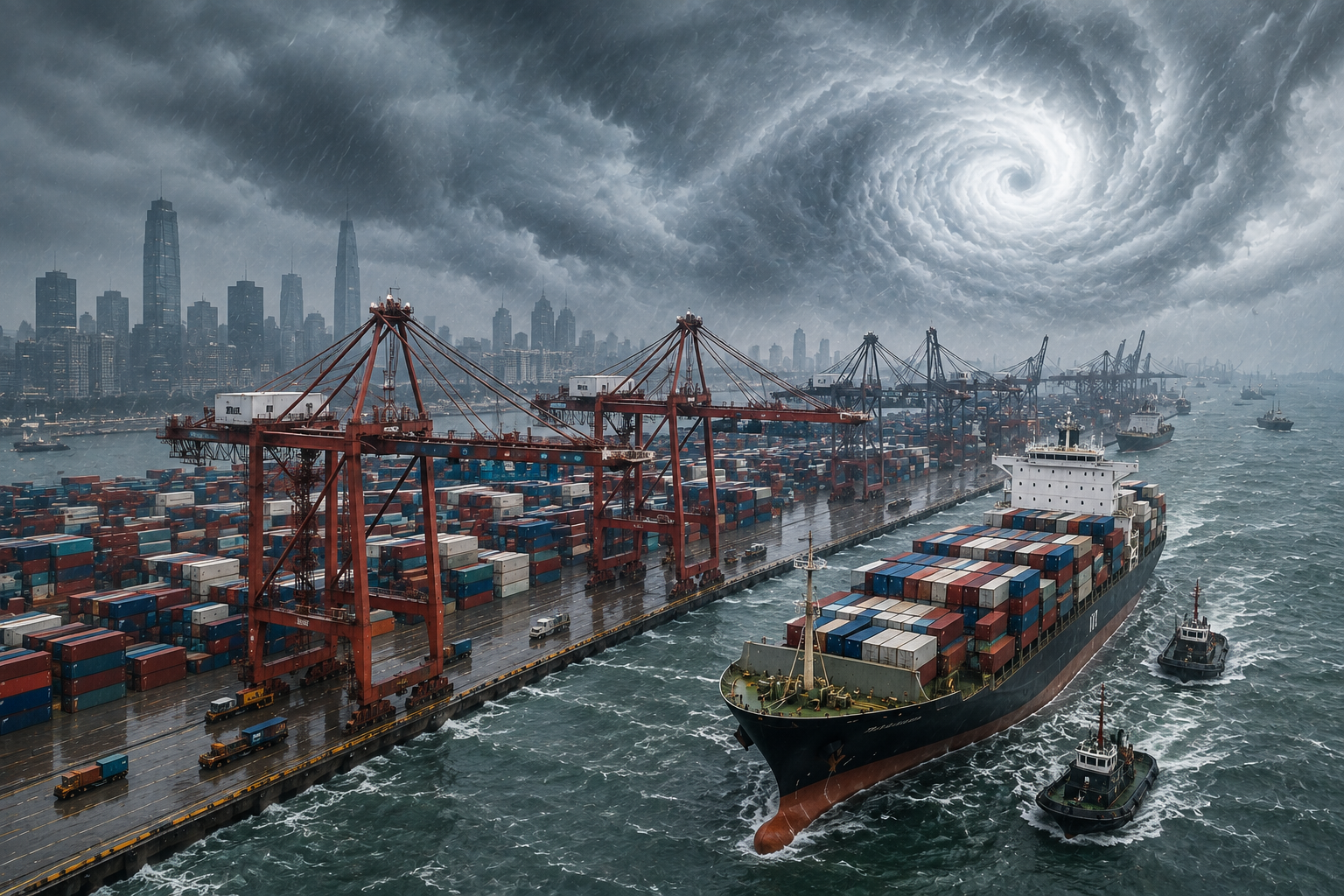
The port reopened. Why is my cargo still not moving?
When a typhoon approaches a Chinese port, the first visible news is usually that terminal operations or vessel movements have stopped. But even after the port reopens, cargo may not immediately move as planned.
The reason is that vessel queues, terminal backlog, cargo cut-off changes, and sailing schedule changes do not disappear the moment the weather improves.
1. When a typhoon approaches, vessel and terminal work stop first
Ports may suspend berth operations, yard work, gate operations, or vessel movements depending on weather and safety conditions. A vessel may wait outside the port, delay berthing, or adjust speed before arrival.
For importers and exporters, this can affect cargo receiving deadlines, planned loading, and the first ETD shown in tracking or schedule systems.
2. When the port reopens, waiting vessels are still there
Reopening does not mean every delayed vessel can berth immediately. Vessels that waited during the closure need to be handled in sequence, and terminal operations may need time to return to normal.
This can create additional waiting even after the official port status changes back to open.
3. Vessel schedules do not end at one port
A container vessel usually calls multiple ports. If one port is delayed, the vessel may need to adjust later port calls, berth windows, and sailing speed.
A small delay at one port can therefore affect the next port, transshipment connection, or final ETA.
4. Port omission can happen
In some cases, a carrier may skip a port call to recover schedule reliability. This is often called port omission.
If port omission occurs, cargo may be rolled to another vessel, routed through another port, or wait for the next available sailing. The exact handling depends on the carrier and the shipment status.
5. A container already at the port is not always loaded
Even if the container is physically at the terminal, it may miss the intended vessel if cut-off, yard status, terminal operation, or vessel plan changes. In that case, the shipment may be rolled to a later sailing.
This is why actual loading confirmation is more important than only checking whether the container entered the port.
6. If ETD changes, can you just add one day to ETA?
Not always. A changed ETD can affect berth windows, sailing speed, transshipment connections, and later port calls. ETA may move by the same number of days, or it may change more depending on the service network.
When schedule disruption occurs, verify the updated ETA from the carrier or forwarder instead of estimating it from the first ETD change.
7. Short China-Korea routes can feel the impact strongly
On short routes, a one- or two-day port disruption can be a large share of the total transit time. Importers may feel the impact quickly because there is less sailing time to absorb the delay.
That makes cut-off, actual loading, departure, and arrival updates especially important for short-haul cargo.
What to check when typhoon news appears
1. Port status
Is the port or terminal open, restricted, or suspended?
2. Cargo cut-off
Has the receiving or document deadline changed?
3. Vessel schedule
Has the vessel's berthing, ETD, or voyage plan changed?
4. Actual loading
Was the container actually loaded on the intended vessel?
5. Actual departure
Has the vessel departed, not just completed loading?
6. Port omission or vessel change
Is the cargo still on the original plan?
7. Updated ETA
What arrival date is now confirmed by the carrier or forwarder?
Do not rely on a single number in tracking
Tracking pages are useful, but one status line may not explain the full situation. During weather disruption, check the sequence: port status, cut-off, loading, vessel departure, and updated ETA.
If these points are not aligned, the shipment may still be at risk even when one screen looks normal.
If the shipment is already delayed
First, confirm whether the container was loaded. Then check the revised ETD and ETA, whether transshipment is involved, and whether delivery commitments need to be updated.
For time-sensitive cargo, ask the forwarder or carrier about alternative sailings or routing options, but compare the cost and actual availability before changing the plan.
An open port does not mean the issue is over
The practical endpoint is not the reopening notice. It is when your cargo has actually loaded, the vessel has departed, and the updated ETA is reliable enough for downstream planning.
Practical point from China typhoon news
Typhoon disruption can affect more than the port closure period itself. It can create vessel waiting, rollover, port omission, changed cut-off, and revised ETA. Importers should check the operational chain rather than only the weather headline.
Check together in LOGILEE
Use LOGILEE shipment tracking, port information, freight market references, and logistics dictionary pages together when reviewing a disrupted shipment. Moving from news to shipment-specific checkpoints makes the delay easier to manage.
Reference and note
This content is general logistics information. Actual port status, vessel plan, loading result, and ETA should be confirmed with the carrier, terminal, or forwarder handling the shipment.
Sources
Carrier schedules, terminal notices, and logistics provider updates should be checked for the specific shipment and port.
Before departure, review the LOGILEE port-weather view and port information together for possible operating impacts.