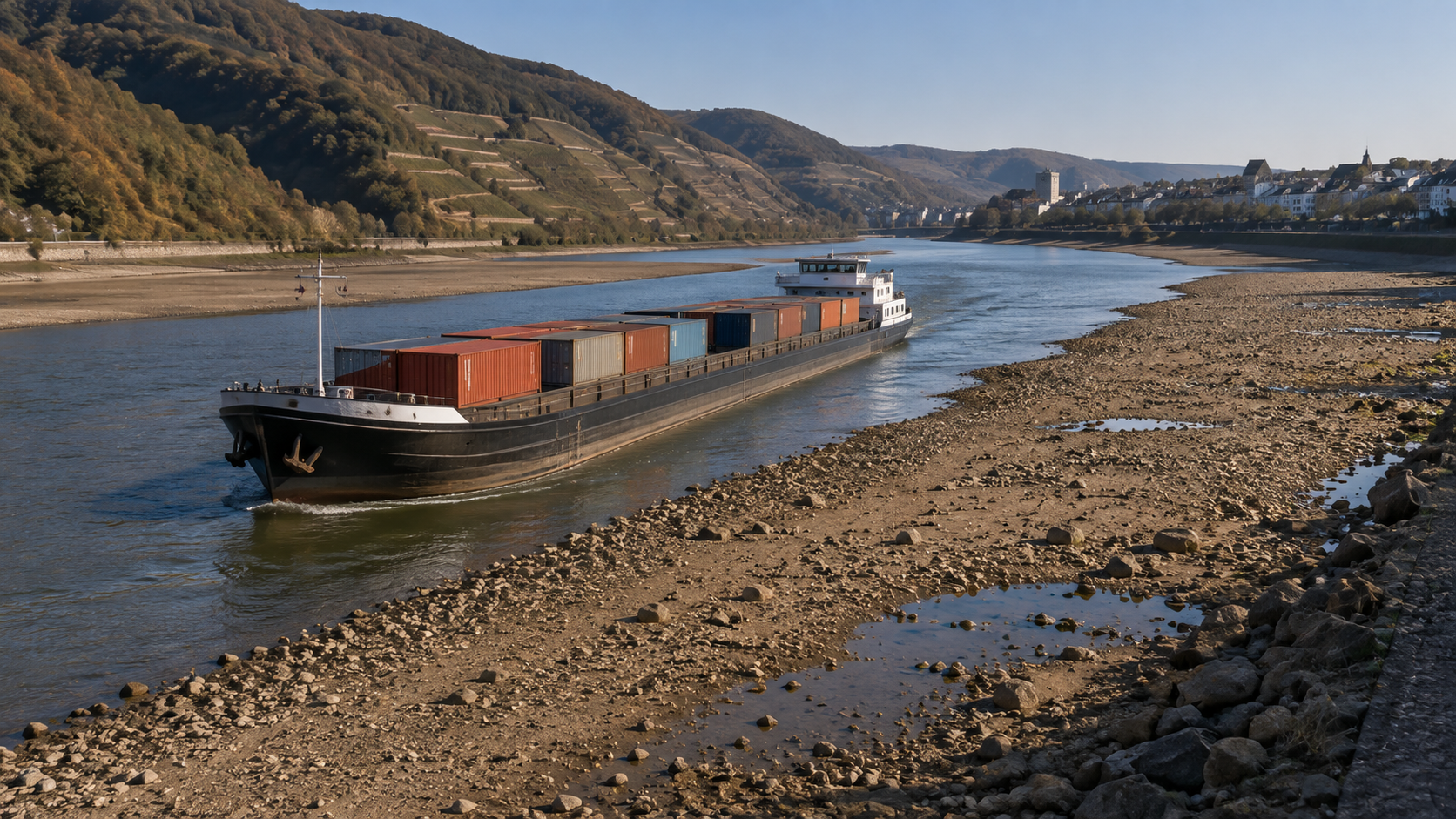
If a river level falls, why do logistics costs rise?
When news reports say the Rhine River has reached very low water levels, the issue can look distant from day-to-day importing. But for European logistics, river conditions can directly affect freight capacity, inland transport cost, and lead time.
The Rhine is one of Europe's important inland transport routes. If water levels fall, vessels may not be able to load as much cargo as usual. That means more trips or alternative transport may be needed for the same volume.
Why the Rhine matters in European logistics
The Rhine connects industrial areas, inland terminals, and major European gateways. Cargo that arrives at a seaport may continue inland by barge, rail, or truck, and the Rhine is part of that inland network.
For importers, the issue is not only whether a vessel can sail. It is whether the planned inland movement can happen at the expected capacity, cost, and schedule.
Why lower water means less cargo can be loaded
When the water is shallow, a barge may need to reduce its draft by loading less cargo. The vessel still moves, but the amount carried per trip can fall.
If a barge normally moves a larger quantity and suddenly can carry only a reduced load, transport capacity tightens. That can increase the cost per ton or per shipment and make available space harder to secure.
The problem is not only barge freight
When barge capacity becomes constrained, cargo may shift to rail or truck. Those alternatives are useful, but they also have limited capacity and different booking conditions.
If many shippers try to switch at the same time, rail and truck rates can rise as well. Lead time can also stretch because inland terminals, warehouses, and carriers need to rearrange their schedules.
Does this matter to Korean importers?
It can matter if the shipment is connected to a European inland destination, supplier, warehouse, or distribution plan. A problem on the Rhine may not change the ocean vessel's arrival date, but it can affect what happens after arrival in Europe.
For example, delivery to an inland location may need a different mode, a changed routing, or additional waiting time. That can affect production schedules, sales commitments, or inventory planning.
What to check under FOB terms
In an FOB transaction, the seller's responsibility normally ends at shipment according to the agreed term, but the buyer still needs to manage arrival-side logistics and total landed cost.
If inland transport in Europe is affected, confirm which part of the movement is included in your forwarder's quote and which cost changes may be passed through later.
Five things to check when this news appears
1. Arrival port and inland destination
Check whether the cargo depends on a Rhine-connected inland route.
2. Planned inland mode
Confirm whether barge, rail, truck, or a combination is planned.
3. Capacity and surcharge notices
Ask whether low-water surcharges, reduced loading, or schedule changes apply.
4. Lead time impact
Check whether the delivery date after port arrival is still realistic.
5. Alternative routing
Compare the cost and timing of rail or truck if barge capacity is limited.
Sometimes lead time matters before freight cost
A rate increase is visible in a quotation, but schedule instability can create a larger operational issue. If materials are needed for production or if customer delivery is fixed, a few days of inland delay may matter more than the freight difference.
In that case, the practical question is which route gives a more reliable delivery window, not only which route is cheapest.
Climate issues are now logistics variables
Low water, heat waves, storms, and other weather-related issues can affect transport networks. They do not always stop logistics completely, but they can reduce capacity and create cost pressure.
For importers, this means market news should be connected back to actual shipment routes, delivery promises, and quote assumptions.
Practical point from the Rhine news
When Rhine low-water news appears, do not stop at the headline. Check whether your shipment uses the affected route, which inland mode is planned, whether surcharges apply, and whether the delivery date still holds.
Check together in LOGILEE
Use LOGILEE's port, country, freight market, currency, and trade data pages together when reviewing European logistics exposure. Keeping route context and market context together makes it easier to ask the right questions before booking or delivery.
Reference and note
Newsis - Rhine low-water report, Aug. 13, 2026
This content is general trade and logistics information. Actual cost, routing, surcharge, and lead time should be confirmed with the carrier, forwarder, or logistics provider handling the shipment.
Compare the operational risk with the latest available freight indicators in the LOGILEE Freight Market.