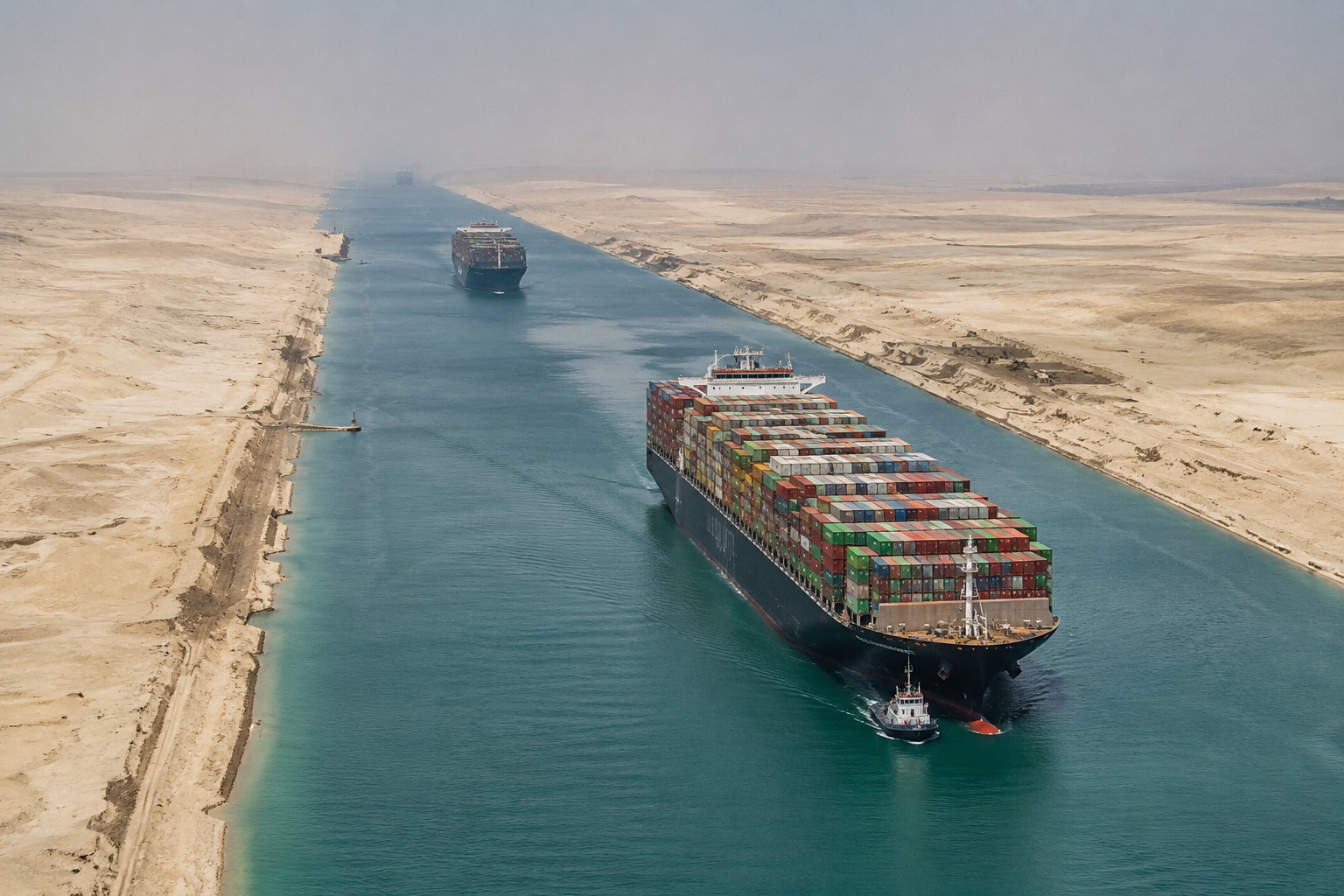
Hormuz and Red Sea Risks: Impact on Global Logistics in August 2026
In August 2026, the global shipping market is experiencing heightened volatility due to uncertainties surrounding key maritime corridors in the Middle East.
In particular, transit risks in the Strait of Hormuz and the Bab el-Mandeb Strait are impacting not only crude oil and energy shipments but also vessel capacity, insurance premiums, and transit times for surrounding routes.
Key Summary- Reduction in vessel transit volume through the Strait of Hormuz compared to normal levels
- Persistent security risks in the Red Sea and Bab el-Mandeb routes
- Potential for increased transit times due to diversions via the Cape of Good Hope
- Possibility of rising War Risk Premiums and ocean freight rates
- Variations in Suez/Red Sea operational policies by carrier and service
The Strait of Hormuz is a critical global energy chokepoint connecting the Persian Gulf and the Gulf of Oman.
According to reports by Reuters citing vessel tracking data from sources like Kpler, vessel transit volumes through the Strait of Hormuz remain significantly lower than normal levels as of August 2026.
Furthermore, some state-owned Chinese shipping companies are utilizing alternative transport methods, such as Ship-to-Ship (STS) transfers outside the Persian Gulf, to avoid the Strait of Hormuz and the Bab el-Mandeb Strait and mitigate exposure to risks.
This indicates a situation where not only are specific vessel schedules delayed, but the actual loading locations and transport routes for cargo are being altered.
The Red Sea and Bab el-Mandeb ContextFor container logistics connecting Asia and Europe, the situation in the Bab el-Mandeb–Red Sea–Suez Canal corridor has a more direct impact than the Strait of Hormuz.
When risks in the Red Sea route escalate, carriers generally consider two operational approaches:
Suez Canal Route
Asia → Indian Ocean → Bab el-Mandeb → Red Sea → Suez → Europe
Cape of Good Hope Diversion
Asia → Indian Ocean → Cape of Good Hope → Atlantic → Europe
Diverting via the Cape of Good Hope increases sailing distances, leading to longer transit times and higher fuel consumption. This may also require more vessels to handle the same volume of cargo.
Consequently, this effectively reduces vessel capacity on specific routes and exerts upward pressure on freight rates.
Not all carriers are avoiding the Red SeaCurrently, not all container carriers have abandoned the Suez Canal.
Maersk and Hapag-Lloyd have transitioned or resumed some Gemini services through the Red Sea/Suez route in 2026.
However, because individual services may be diverted back to the Cape of Good Hope depending on security conditions, it is difficult to characterize the current market as simply "Red Sea blocked" or "Red Sea operations normalized."
It is more accurate to view the current market as one where actual operational routes can vary not only by carrier but also by specific service within the same carrier.
Therefore, even for the same Korea–Europe cargo, transit times and actual operational routes can differ depending on the carrier, the specific service, and the time of booking.
Impact on Import/Export Companies1. Transit Time Fluctuations
If the route changes from what was anticipated at the time of booking, the ETA may also change.
For Europe-bound cargo, it is crucial to verify whether the service is using the Suez Route or the Cape Route rather than relying solely on the transit time displayed at the booking stage.
Given the potential for operational policy changes based on security conditions, it is advisable to re-verify the latest schedule before shipment.
2. Increased Freight Rate Volatility
Longer routes reduce vessel turnaround efficiency.
Because the number of voyages a vessel can complete in a given period decreases, this can impact the effective supply of vessel capacity across the market.
When combined with additional fuel and insurance costs, this can lead to increased volatility in ocean freight rates.
3. War Risk Premium
Vessels operating in high-risk conflict zones may be subject to additional War Risk Premiums on top of standard marine insurance.
The application and level of these premiums depend on the vessel, route, insurer, and prevailing risk levels. If the situation deteriorates, shippers should also check if carriers pass on a portion of these costs as a separate surcharge.
4. Impact on Raw Material Logistics
This situation is not limited to containerized cargo.
Commodities heavily dependent on Middle Eastern routes, such as crude oil, LNG, LPG, and bulk cargo, are more directly affected by the situation in the Strait of Hormuz and the Red Sea.
In fact, for some crude oil shipments, alternative logistics methods are being used to reduce exposure to traditional chokepoints, such as STS transfers outside the Persian Gulf or utilizing loading ports on the Mediterranean side of Egypt.
Checklist for Import/Export Managers① Actual Operational Route
Verify whether the service is using the Suez Canal Route or the Cape of Good Hope Route.
Even with the same carrier and destination, the actual route can vary by service.
② Latest Transit Time
Check the latest schedule and transit time based on the current service, rather than historical averages.
③ Surcharges
Check for the application of additional costs such as War Risk, Emergency, or Fuel surcharges.
Especially when geopolitical situations change rapidly, it is necessary to verify the possibility of additional costs or conditions changing after booking.
④ Transshipment Port
Confirm any changes to transshipment ports and connection schedules.
Changes in the main route can often lead to changes in the existing transshipment structure.
⑤ ETA Buffer
For time-sensitive cargo, it is safer to include a buffer in your existing schedule.
For cargo directly tied to production or customer delivery schedules, it is better to account for potential delays in advance rather than relying on a single ETA.
ConclusionA key variable in the global shipping market in August 2026 is the uncertainty surrounding Middle Eastern maritime chokepoints.
Specifically, the situations in the Strait of Hormuz and the Bab el-Mandeb Strait affect energy logistics and Asia–Europe maritime transport, respectively.
However, not all vessels and carriers are responding in the same way. While some services utilize the Red Sea/Suez route, others may divert via the Cape of Good Hope depending on security conditions.
Therefore, in the current market, it is essential to verify the actual route, transit time, surcharges, and transshipment schedules for each carrier and service at the time of booking, rather than simply checking whether the Red Sea is "open."
FAQ
Q. Is the Suez Canal currently unavailable?
No. The Suez Canal should not be considered completely closed. Some carriers and services are utilizing the Red Sea/Suez route, while others may divert via the Cape of Good Hope for risk management purposes. Operational policies may change again depending on security conditions.
Q. Why do freight rates rise when diverting via the Cape of Good Hope?
Because longer sailing distances increase fuel consumption and voyage duration, which reduces vessel turnaround efficiency. Insurance premiums and additional risk-related costs can also impact total transport expenses.
Q. Are Korean exporters affected?
Yes, if the cargo is destined for Europe/Middle East or transits through those regions, it may be affected. For time-sensitive cargo, it is recommended to check the actual operational route and the latest transit time before booking.
Q. What should I check first when booking?
It is recommended to confirm the actual operational route of the service provided by the carrier. Even with the same POL/POD, there can be significant differences in transit time between the Suez Route and the Cape Route depending on the service.
Last Updated: 2026-08-19
Sources
- Reuters, Reports on vessel transit in the Strait of Hormuz, August 2026
- Reuters, Reports on Chinese state-owned shipping companies' STS transfers and diversions outside the Persian Gulf
- Hapag-Lloyd, Official updates on Red Sea/Suez operations, 2026
- Maersk, Official updates on Red Sea/Suez operations, 2026
To review freight movements alongside this risk, check the latest available indicators in the LOGILEE Freight Market.